
Snowbird Home Maintenance & Glass Protection Guide
For seasonal residents, the annual migration away from the Gulf Coast marks the end of a beautiful winter season filled with pristine beach days and warm afternoon breezes. However, as the seasonal population heads north for the summer, vacant properties are left behind to face the most brutal environmental stretch of the year. The summer months bring a relentless combination of intense solar heat, heavy tropical downpours, and suffocating atmospheric moisture. While most homeowners remember to secure their outdoor patio furniture, lock their entry shutters, and program their security alarms, many completely overlook the delicate internal elements of their homes.
Failing to prepare your interior building materials for an extended vacancy can lead to costly structural damage, including aggressive indoor fungal growth and irreversible mirror silvering decay. At Luxurious Glass, we specialize in heavy-duty structural retrofitting and residential glass care, helping property owners establish a comprehensive snowbird home maintenance strategy that preserves their luxury design assets all year long.
In this guide, we break down the protective mechanics of long-term climate management, the biological reasons why high moisture degrades custom mirrored backings, and how partnering with local glass experts keeps your home safe while you are away.
The Invisible Summer Threat: Understanding Tropical Humidity
To successfully shield your home from seasonal decay, you must examine the unique environmental forces that take over the region during the summer months. According to historic climate metrics tracked by the Florida Climate Center, summer relative humidity (RH) levels consistently hover between 75 percent and 90 percent, paired with a relentless heat index that frequently climbs past 100 degrees Fahrenheit.
When a luxury home sits vacant for several months, this intense exterior moisture puts constant physical pressure on the building envelope. Humid air naturally migrates toward cooler spaces, constantly seeping into your home through microscopic gaps in baseboards, drywall joints, and older window frames.
If your indoor climate control system is turned completely off or set incorrectly, the indoor relative humidity will quickly climb past the dangerous 60 percent threshold. This damp environment creates a serious threat to your property, causing wood flooring to warp, structural drywall to soften, and delicate custom glass and mirror installations to deteriorate prematurely.
Preventing Desilvering: How Humidity Destroys Luxury Mirrors
The single most common aesthetic issue that shocks seasonal homeowners when they return in the autumn is the appearance of ugly black spots, fuzzy cloudiness, or dark jagged borders creeping along the perimeter of their custom bathroom and foyer mirrors. This permanent structural failure is known as desilvering or black edge corrosion.
To understand why this happens, it helps to examine how a modern mirror is manufactured. A premium mirror is built by applying a microscopically thin chemical layer of pure silver directly onto the back of a sheet of clear optical glass. Because raw silver oxidizes rapidly when exposed to air, manufacturers protect this delicate layer by covering it with a sealing coat of copper, followed by a thick layer of heavy-duty, protective backing paint.
Despite these protective paint layers, the outer edges of a cut mirror remain highly vulnerable. When your indoor spaces are subjected to stagnant, high-humidity air for months at a time, airborne moisture droplets settle directly along the mirror's exposed cut edges. Over time, this trapped moisture breaks down the protective backing paint and chemically attacks the silver layer beneath it. As the silver oxidizes, it detaches from the glass face, turning into a dark, non-reflective gray or black color. Once desilvering occurs, the reflective backing is permanently ruined, and the mirror must be completely replaced.
Defeating Mildew: Protecting Enclosures and Shower Glass
The second major threat to an unprepared vacant home is the rapid colonization of harmful indoor mold and mildew. Fungal spores naturally float through the air, requiring only three basic elements to settle down and multiply quickly: warmth, organic dust particles, and consistent moisture.
An untended master bathroom enclosure provides the perfect environment for this fungal growth. If a shower enclosure is left dirty, microscopic deposits of soap scum, body oils, and hard water minerals stay trapped inside the tiny pores of the glass. Over months of stagnant summer heat, these organic residues act as a food source for mold spores.
As the humidity rises, mold and mildew quickly take root inside the silicone sealants, along the rubber tracking sweepers, and across the structural hardware brackets of your frameless shower doors. This infestation leaves behind dark green or black stains, causes unpleasant musty odors throughout your master suite, and can lead to permanent chemical etching on your custom glass.
Long-Term Climate Guidelines: The 50% Rule
The single most effective way to protect your interior glass, custom mirrors, and expensive woodwork from summer decay is by actively managing your vacant home's indoor humidity. Relying solely on a basic thermostat temperature setting is rarely enough; you must focus directly on stabilizing your indoor relative humidity.
According to seasonal energy management guidelines published by Florida Power & Light (FPL), homeowners leaving properties vacant for the summer should follow strict indoor climate settings:
Programmable AC Settings: If your home features a programmable thermostat, configure the system to cool the home to 72 degrees Fahrenheit for two hours before sunrise each day, and set the thermostat to 88 degrees for the remainder of the afternoon. This targeted early-morning cooling cycle forces your AC system to extract maximum airborne moisture during the coolest hours, keeping your home dry without consuming excessive electricity.
Non-Programmable AC Settings: For older, non-programmable air conditioning units, set your system to a constant 80 degrees Fahrenheit with the fan setting positioned strictly to AUTO. Never leave the fan set to ON, as this runs the fan continuously, pulling humid outdoor air directly into your home and evaporating trapped water back off your AC coils into your living spaces.
Dedicated Dehumidification: For maximum protection, installing a dedicated whole-home dehumidifier is highly recommended. Set the system to maintain a constant 50 percent relative humidity level. This safe threshold completely halts the reproductive cycles of mold and dust mites, ensuring your home stays clean and dry while you are away.
Average Summer Environmental Metrics for Southwest Florida
Source - City of Naples Gov
Your Step-by-Step Departure Checklist for Glass Care
To ensure your custom interior features remain completely protected throughout months of summer absence, incorporate this specialized summer glass care protocol into your seasonal shutdown checklist.
1. Perform a Thorough Deep Cleaning
Before locking your doors, clean every mirror and glass surface in your home. Use a soft microfiber cloth and a mild, alcohol-based cleaner to remove fingerprint smudges, hairspray residues, and dust. Eliminating these organic materials strips mold spores of the food source they need to colonize the glass faces.
2. Apply Premium Hydrophobic Protectors
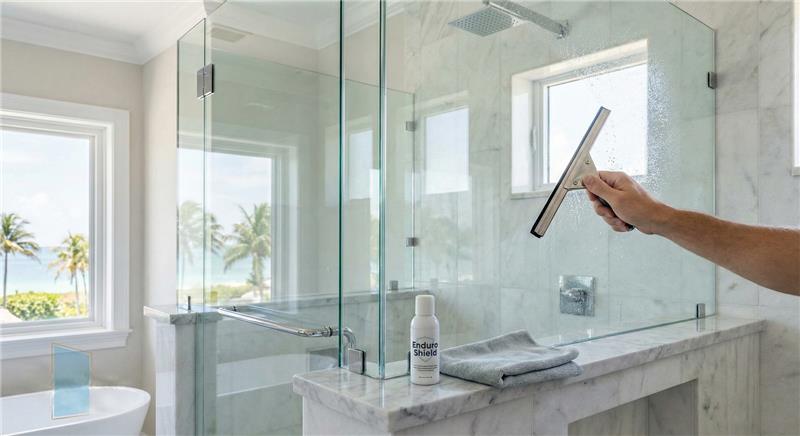
For your shower doors and exterior-facing glass features, apply a high-quality hydrophobic protective treatment. This specialized coating fills the microscopic pores of the glass, creating an ultra-smooth surface that actively repels lingering moisture, hard water minerals, and soap oils, preventing permanent chemical etching while you are away.
3. Ensure Complete Room Ventilation
Never leave your interior doors tightly closed during a long vacancy. Keep your master bathroom doors, walk-in closets, and laundry rooms propped wide open to encourage continuous, balanced airflow from your central air conditioning vents. Proper circulation prevents stagnant, humid air pockets from forming around your custom mirror walls.
4. Schedule Routine Home Watch Inspections
Arrange for a professional local home watch service or a trusted neighbor to walk through your property at least once every two weeks. Instruct them to check your hygrometer readings, verify that your AC system is cycling correctly, and inspect your bathroom vanities for early signs of moisture accumulation or plumbing leaks.
Upgrade Your Home Before the Summer Dampness Sets In
Don't let high summer humidity ruin your beautiful interior design investments or cause unexpected replacement costs. We are fully equipped to evaluate your current home setup and upgrade your space before you depart for the season.
How Luxurious Glass Protects Your Investment
Preparing a luxury estate for an extended seasonal vacancy requires an absolute mastery of material physics, climate science, and experienced field craftsmanship. At Luxurious Glass, we bring more than 50 years of combined industry experience directly to your custom residential and commercial properties. As a proud, family-owned and locally operated business, we handle every step of your digital site surveying, in-house fabrication, and final installation, ensuring unmatched quality control and total peace of mind.
Our professionals take all the guesswork and stress completely off your shoulders. We sit down with you or your property manager to carefully review your home layout, assess your current window insulations, and help you choose the ideal glass thickness, moisture-resistant mirror coatings, and hardware configurations for your property. Whether you want to guard against desilvering using premium custom mirrors, modernize your master suite with frameless shower doors, or complete a fast glass repair, we ensure your installations remain beautiful, code-compliant, and built to withstand the toughest summer weather.
Conclusion
Protecting your luxury home from the elements shouldn't require constant worry while you are away for the summer. By incorporating smart climate guidelines, ensuring proper room-to-room ventilation, and applying premium moisture-resistant treatments to your mirrors and glass doors, you can safeguard your interior investments against costly humidity damage. Partnering with dedicated local glass professionals ensures your custom features are engineered using heavy-duty materials designed to handle the toughest tropical weather, providing absolute peace of mind until you return to the coast.
If you are ready to prepare your property with advanced protective solutions, let our experienced family-operated team guide you forward. Contact us and receive a clear, detailed estimate tailored to your project goals.
Frequently Asked Questions
What exactly is snowbird home maintenance for luxury mirrors?
Specialized snowbird home maintenance involves deep-cleaning reflective surfaces to remove organic dust, sealing perimeter borders against moisture, and adjusting your HVAC settings to keep indoor humidity below 55 percent to prevent permanent silvering decay.
How does summer glass care prevent mold inside showers?
Proactive summer glass care utilizes premium hydrophobic coatings to seal the microscopic pores of your shower doors. This prevents water, soap scum, and mold spores from sticking to the surface, halting fungal growth during your absence.
Can a desilvered mirror be repaired or re-silvered on-site?
No, once a mirror's silver backing oxidizes and turns black, it cannot be repaired on-site. The damaged panel must be carefully extracted and replaced with a new custom sheet featuring advanced moisture-resistant protective backings.
Why does Naples seasonal house prep require setting the AC fan to AUTO?
Setting your AC fan to AUTO ensures the system runs only during active cooling cycles. Leaving the fan set to ON runs it continuously, drawing humid outside air directly into your home and re-evaporating moisture off the cooling coils.
Will applying a hydrophobic coating affect the clarity of my windows?
Not at all. Modern, professional-grade hydrophobic treatments are completely clear and optically invisible. They enhance overall clarity by helping your windows resist dust, fingerprints, and water spots, keeping your views sharp and pristine.
What is black edge corrosion, and can it spread over time?
Black edge corrosion is the dark, jagged discoloration that forms when moisture destroys a mirror's silver backing. Once moisture penetrates the perimeter seal, the oxidation process will slowly spread inward across the reflection if humidity remains high.