
Understanding the Inline Shower Door Configuration
When homeowners begin exploring shower enclosure options, they quickly discover that there is more than one way to configure a glass shower. Among the most popular layouts is the inline shower door configuration, a design that combines clean lines, practical functionality, and a modern appearance.
At first glance, an inline layout may look simple. However, the way the glass is arranged can significantly influence how a shower enclosure functions, how open the bathroom feels, and how effectively the design works within the available space.
Throughout Naples, homeowners choose different shower configurations based on room dimensions, entry access, and overall design goals. At Luxurious Glass, we often help clients compare layouts to determine which option best suits their bathroom and lifestyle.
Understanding how an inline configuration works, when it makes sense, and what design possibilities it offers can make the selection process much easier. In this guide, we help you understand the basics of inline shower doors, how the components work together, and where this style tends to perform best.
What Is an Inline Shower Door?
An inline shower door is a shower enclosure design in which the door and fixed glass panels are positioned along the same straight line. Rather than wrapping around a corner or forming an angled enclosure, all glass components sit on a single plane. The term "inline" simply refers to the fact that the door and fixed panels are arranged in a single straight line.
In many installations, the design consists of:
One fixed glass panel and door
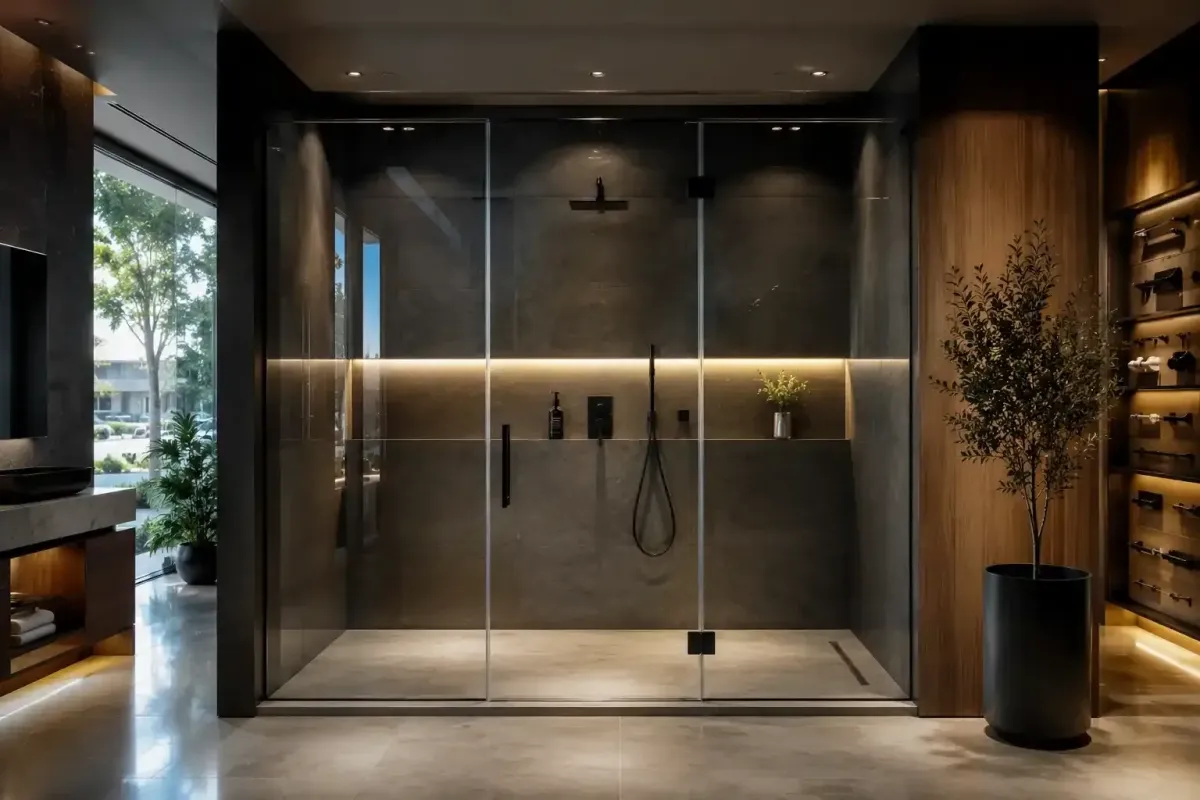
Two fixed glass panels with a centered door
A larger fixed panel paired with a hinged door
Because all components remain aligned, the finished enclosure often creates a clean and balanced appearance.
How a Glass Panel and Door Work Together in an Inline Design
One of the defining features of an inline configuration is the way the glass panel and door work together to create a single, continuous enclosure line.
The fixed panel provides structural stability and helps contain water within the shower area, while the door provides convenient access. Because both components remain aligned on the same plane, the finished design often appears more streamlined than configurations that require multiple angles or corner connections.
A typical inline layout may include:
A fixed panel with a hinged door: One of the most common configurations for residential bathrooms, often incorporating swinging shower doors for convenient access and a streamlined appearance.
A centered door between two panels: Frequently used for larger openings where symmetry is a design priority.
An offset door design: Allows homeowners to position the entry point where it works best for the bathroom layout.
The size relationship between the glass panel and door is determined by the dimensions of the opening, hardware requirements, and the desired entry width.
When an Inline Shower Door Makes the Most Sense
Inline show configuration is not the right fit for all bathrooms. The layout works best when certain design conditions are present.
An inline shower door is often a strong choice when:
The shower opening is relatively wide: Longer openings allow the door and fixed panels to be arranged comfortably on a single plane.
A clean, minimalist appearance is desired: Straight lines and fewer visual transitions create a sleek aesthetic.
The bathroom has a rectangular shower footprint: Many inline configurations naturally complement rectangular layouts.
Symmetry is important to the overall design: Centered door arrangements can create visual balance.
Homeowners want flexibility in door placement: Inline systems often provide multiple configuration options.
These characteristics help explain why the inline shower door remains one of the most popular choices in modern bathroom design.
Finding the Right Configuration Starts with Understanding the Space
Many homeowners begin with a specific shower door style in mind, only to discover that the overall configuration matters just as much as the glass itself. We often help clients compare different layouts that improves accessibility, visual balance, and everyday usability.
Why Inline Designs Work Well for a Wide Shower Opening
One reason homeowners frequently choose an inline shower door is its ability to accommodate a wide shower opening without making the enclosure feel crowded.
As shower openings become larger, a single oversized door is often not the most practical solution. Larger doors can place additional stress on hinges, require more clearance, and become less convenient to operate.
Instead, designers frequently divide a wide shower opening into multiple sections using fixed glass panels and a properly sized door.
Common Benefits of Inline Configurations for Wider Openings
Source: National Kitchen Bath Association (NKBA)
For many homeowners, the ability to manage a wide shower opening without sacrificing aesthetics is one of the biggest advantages of an inline layout.
Common Design Options for an Inline Shower Door
One reason the inline shower door remains popular is its flexibility. The same basic configuration can be adapted to suit a variety of bathroom sizes and design preferences.
Common options include:
Single Glass Panel and Door
A fixed panel paired with a hinged door creates a clean, straightforward layout that works well in many residential bathrooms.
Centered Door Design
Two fixed panels with a centered door provide visual symmetry and are often used for larger enclosures.
Offset Door Configuration
Placing the door closer to one side can improve accessibility while maintaining the overall inline appearance.
Frameless Inline Layouts
Minimal hardware and uninterrupted sightlines help create a more open, modern aesthetic.
The ideal arrangement depends on the dimensions of the opening, the desired entry width, and the overall design goals of the space.
Many homeowners who prefer the above layouts also explore heavy frameless glass doors because they provide a clean appearance while maintaining structural stability.
Is an Inline Shower Door Right for Your Bathroom?
An inline shower door can be an excellent choice when the shower opening is wide enough to accommodate both a door and one or more fixed panels on the same plane.
Homeowners often find this configuration appealing because it offers:
Clean, contemporary lines
Flexible design options
Effective use of a wide shower opening
A balanced appearance that complements many bathroom styles
However, every bathroom is different. Factors such as wall dimensions, entry requirements, and available space should all be considered before selecting a configuration.
For this reason, comparing several enclosure layouts before making a final decision is often worthwhile. A configuration that looks ideal in one bathroom may not necessarily be the best solution in another.
Conclusion
An inline shower door configuration combines simplicity, functionality, and design flexibility in a way that appeals to many homeowners. By aligning the door and fixed panels on a single plane, the layout creates a clean appearance while accommodating a variety of shower sizes and styles.
Whether you're planning a new bathroom or upgrading an existing enclosure, understanding how a glass panel and door work together can make it easier to evaluate your options. Inline layouts are particularly effective for a wide shower opening, but the best configuration will always depend on the unique characteristics of the space.
Luxurious Glass is a locally owned glass company in Naples that understands the design preferences, construction styles, and remodeling trends that influence bathroom projects throughout the Naples area.
If you're considering a new shower enclosure and want professional guidance on the best layout for your bathroom, call (239) 315-4138 to schedule a consultation.
Frequently Asked Questions
Is an inline shower door better than a corner shower enclosure?
The answer depends on the bathroom layout. Inline configurations work particularly well for straight openings, while corner enclosures are often used when space constraints require a different approach.
Why do designers recommend an inline shower door for wider openings?
An inline shower door allows larger shower openings to be divided into fixed panels and a functional door, creating a balanced appearance while maintaining ease of use.
Can an inline shower door work in a small bathroom?
Yes. While many people associate inline designs with larger showers, certain configurations can also work effectively in smaller spaces when properly planned.
Does a glass panel and door configuration make a bathroom feel larger?
A glass panel and door arrangement can help maintain open sightlines throughout the room, which often contributes to a more spacious visual appearance.
What are the advantages of an inline shower door compared to a single shower door?
An inline shower door can provide greater flexibility for wider openings, improved visual balance, and more design options than a standalone door in some situations.
What's the best way to enclose a wide shower opening?
One of the most common solutions is to use a properly sized door combined with one or more fixed glass panels. This approach can improve usability while maintaining a balanced appearance.