
Hurricane Code Residential Mirror in Naples: What Florida Law Actually Requires
A common question comes up almost every time a homeowner plans a large mirror installation in a storm-prone part of Florida: does a hurricane code residential mirror in Naples requirement actually exist, the same way it does for windows and doors? The honest answer is more nuanced than most homeowners expect, and getting it wrong in either direction can cost real time and money.
Florida's wind-borne debris requirements, the rules that mandate impact-rated glass for many homes near the coast, apply specifically to glazed openings in the building envelope. Decorative wall mirrors mounted on the inside of a Naples home are not treated the same way under the code as an exterior window or sliding glass door, even though both are technically made of glass. The distinction comes down to function rather than material, since the code cares about what a piece of glass is doing structurally, not simply what it is made from.
That distinction matters because it changes what actually needs to be verified before a mirror installation, and what does not. Confusing the two can lead a homeowner to either overpay for unnecessary certification or, just as easily, overlook the safety standards that genuinely do apply to a large residential mirror, both of which are avoidable with a bit of upfront clarity.
This guide covers what that hurricane code question actually involves, how the rules governing exterior glass differ from those covering interior fixtures, and what a mirror installation in Naples actually needs to meet before it goes on the wall.
Does Naples Wind Load Glass Code Apply to Residential Mirrors?
Naples wind load glass code, more precisely the Florida Building Code's wind-borne debris region requirements, governs exterior glazed openings such as windows, doors, and skylights. These openings must be impact-rated or protected by approved shutters because they form part of the building envelope exposed directly to storm-driven wind and debris.
When planning glass work with Luxurious Glass, understanding whether the installation is considered a glazed opening helps determine which requirements apply before the project moves forward.
This requirement exists because a breached window or door during a hurricane can allow wind pressure to build up inside a structure in a way that threatens the roof and walls themselves, not just the glass.
A residential mirror mounted on an interior wall is not part of that envelope and does not fall under the same wind-borne debris provisions. This is one of the most common points of confusion homeowners run into when researching Florida's hurricane zone glass safety standards, since the rules were written for building openings rather than decorative fixtures.
Impact Glass Requirements in Naples: Where Mirrors Actually Fit
Impact glass requirements in Naples depend on whether the glass forms part of a building opening or serves as an interior fixture.
Exterior Glazed Openings
Applies to windows, doors, and skylights within the wind-borne debris region.
These openings generally need to meet ASTM E1996 impact standards.
Approved storm protection can be used where applicable.
Product approval numbers are checked during the permitting process before approval.
Interior Residential Mirrors
Decorative wall mirrors are not classified as glazed building openings.
Even large mirrors in a Naples primary suite do not generally need the same impact rating as exterior windows.
They still need to meet applicable safety standards.
Primary Suite Mirror Installations
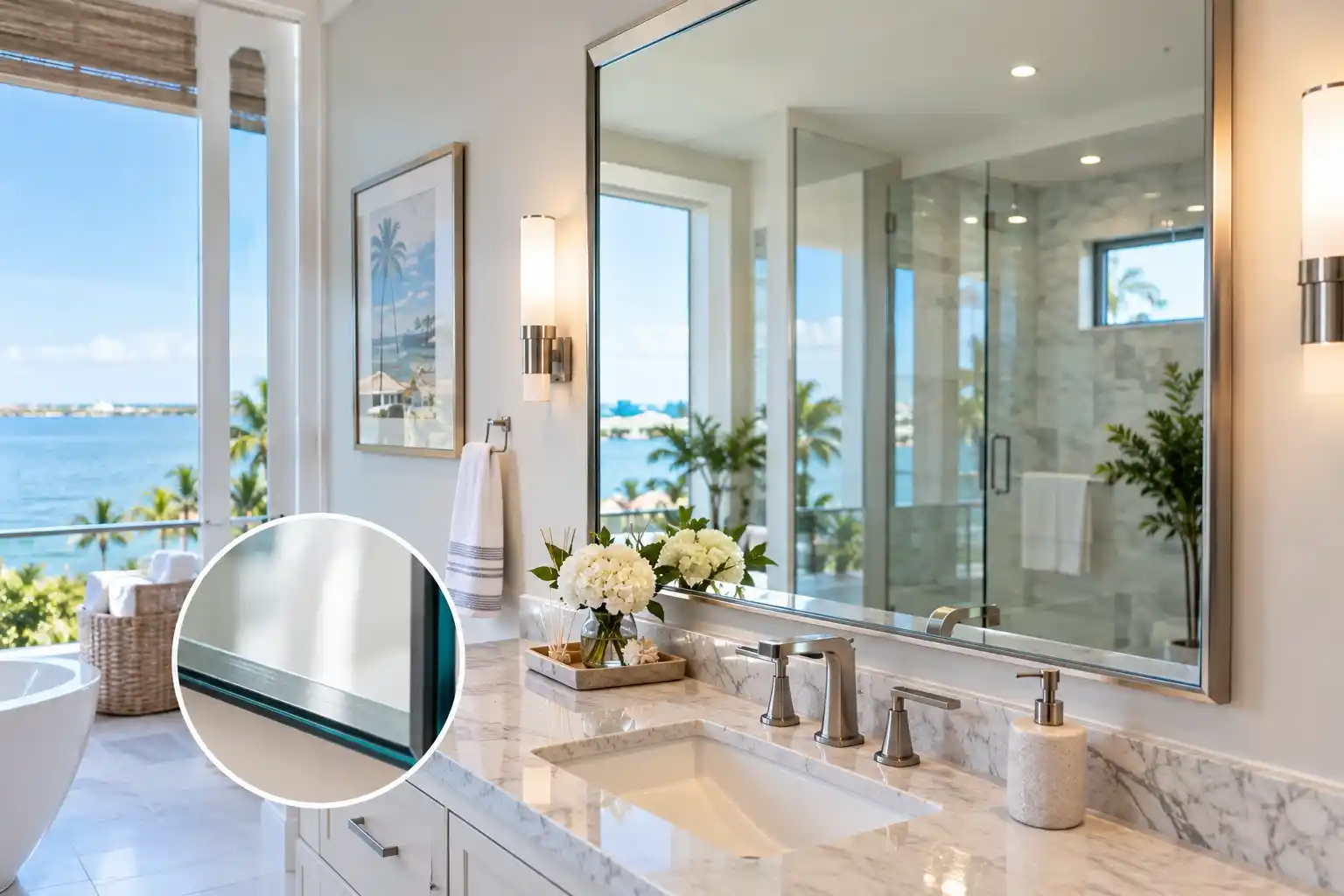
A large primary suite mirror installation in a Naples home still needs appropriate safety measures. The key distinction is that these requirements differ from the wind-borne debris standards applied to exterior openings.
Residential Mirror Code Compliance in Naples: What Actually Applies
Residential mirror code compliance in Naples focuses on general safety glazing rather than hurricane-specific impact ratings. The key considerations include:
Safety glazing: Mirrors generally need tempered glass or safety backing that holds fragments together if the glass breaks. This applies regardless of the home's proximity to the coast.
Everyday safety: These requirements help reduce injury from common accidents, such as a dropped object or accidental impact.
Proper anchoring: Large or oversized mirrors need adequate structural support. Improper anchoring can create a safety hazard regardless of storm-related glazing requirements.
Outdoor exposure: Mirrors installed in exposed areas face additional concerns beyond basic code requirements. An outdoor cabana mirror installation, for example, must account for constant moisture and weather exposure.
Paying for Hurricane Certification on a Mirror? You Do Not Need To.
Impact glazing is required for windows and doors, not decorative mirrors. Chasing that certification wastes money and time. What matters is safety glazing and proper anchoring. Luxurious Glass keeps your project compliant without unnecessary upgrades.
How Building Code Treats Glass Differently by Application
The table below compares how Florida's building code and general safety glazing standards apply differently depending on the type of glass installation.
Source: Florida Building Code, 8th Edition, Chapter 16, Section 1609.1.2, Protection of Openings
A mirror installed as part of a permitted renovation, such as a full lanai or outdoor living space, may still come under building department review during inspection. This can include projects involving custom mirrors, particularly when the glass is exposed to the elements.
Permitted Renovations: A mirror included in a full lanai, outdoor living space, or another permitted renovation may be reviewed as part of the broader project.
Mounting and Structural Support: Inspectors may review how the mirror is mounted and whether the installation provides adequate structural support.
General Glazing Safety: The inspection can also address general glazing safety, even when the mirror itself is not classified as a building envelope opening.
Storm Impact Rating: Inspectors are generally checking mounting and general glazing safety rather than requiring a storm impact rating for the mirror itself. That rating requirement does not apply simply because the mirror is installed outdoors or included in a permitted renovation.
A project involving custom lanai mirrors, for example, can involve exposed glass without making the mirror a building envelope opening.
When a Permit Review Actually Gets Involved
Most residential mirror installations do not require a separate permit, since they are considered a decorative fixture rather than structural or envelope work. That changes when a mirror is integrated into a larger renovation that already requires a permit, such as a full bathroom remodel or a new lanai structure, since the mirror then becomes part of a broader scope of work already under review.
Mounting method and structural support come under more scrutiny in these situations, particularly for large or ceiling-mounted installations. Overhead placement warrants extra attention, as ceiling mirror installations introduce different gravity-related failure risks than mirrors mounted on a vertical wall. These considerations apply regardless of whether hurricane glazing code technically applies.
Getting Mirror Installations Right the First Time
Understanding Naples glass code requirements before ordering a large custom mirror can prevent unnecessary certification costs and overlooked safety details. A mirror does not need hurricane impact glazing, but it does need proper tempering, backing, and anchoring based on its size and location.
These requirements become more important as mirror size increases. Large-format projects, including dance studio mirror installations, show how proper tempering, safety backing, and secure anchoring become increasingly important as the surface area and weight of the glass grow.
The same safety principles apply whether the installation is residential or commercial. Focusing on secure mounting and appropriate glass specifications helps ensure that a large mirror is installed safely rather than focusing only on its style and finish.
Conclusion
A hurricane code residential mirror in Naples requirement, in the strict sense applied to windows and doors, does not exist for standard decorative mirrors. What actually governs a mirror installation is a separate set of general safety glazing rules covering tempering, backing, and secure mounting rather than storm-specific impact ratings.
Custom residential mirrors throughout Naples are fabricated and installed in line with the safety standards that actually apply to them, a distinction Luxurious Glass walks homeowners through before any glass is ordered. Get in touch with us today to discuss your project and get clear answers before you order.
Frequently Asked Questions
Does a hurricane code residential mirror in Naples requirement actually exist?
Not in the same form as windows and doors. Hurricane wind-borne debris code applies to exterior glazed openings, not decorative interior mirrors, though mirrors still need to meet general safety glazing standards.
What glass code applies to custom mirrors in Naples, FL?
Custom mirrors generally need to meet safety glazing standards requiring tempered glass or safety backing, rather than the hurricane impact glazing code that applies to windows and doors.
Does Naples wind load glass code affect mirror installation costs?
Generally not, since mirrors are not classified as glazed building openings and do not require the impact-rated glass mandated for windows in wind-borne debris regions.
Are impact glass requirements in Naples ever relevant to mirrors?
Only if a mirrored panel is functioning as a window or door replacement rather than a purely decorative fixture, in which case it would be treated as a glazed opening.
What does residential mirror code compliance in Naples typically involve?
Tempered glass or safety backing to prevent hazardous shattering, along with proper wall anchoring for larger installations, particularly during permitted renovation work.
Do I need a building permit to install a decorative mirror in Naples?
Standalone mirror installations do not require a building permit. However, if your mirror is part of a larger permitted project, such as a full bathroom remodel or lanai addition, building inspectors will review its mounting and safety backing during the standard inspection.